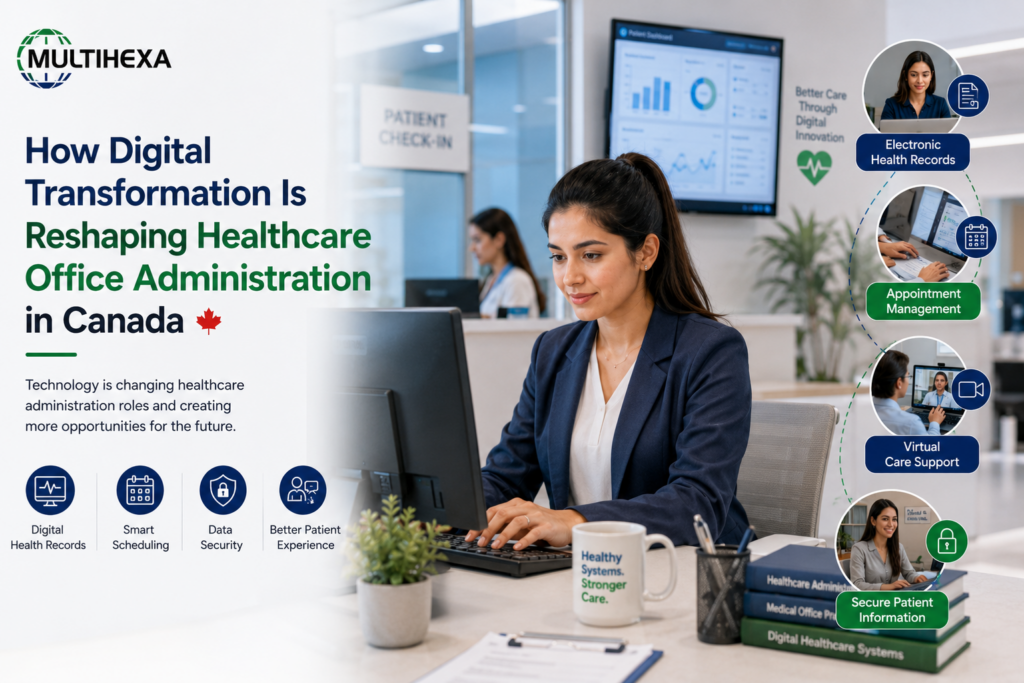
Not only does healthcare need more doctors and nurses, it needs people who can increasingly help a digital healthcare system run.
Canada is in the middle of one of the biggest healthcare technology upgrades in its history. All the hospitals, clinics, family practices, diagnostic centres, and virtual care providers are replacing paper files with electronic health records (EHRs). According to the Canadian Institute for Health Information (CIHI), digital health adoption continues to expand across provinces as healthcare organizations prioritize better patient access.
What does this mean for students?
A healthcare administration career today looks very different from how it was 5 years ago. Administrative professionals are no longer just answering calls or filing paperwork. They are becoming technology-enabled coordinators who manage patient journeys, their digital records, insurance documentation, and virtual healthcare operations.
f you are someone who is considering medical office administration as a career, this shift can create more job opportunities for you.
Digital Healthcare Canada Is Changing the Role of Medical Office Administration
You talk a walk in any Canadian medical clinic today and you will notice one thing missing, and that is a stack of patient files.
Instead, reception desks often operate with multiple monitors, displaying schedule software, electronic health records, insurance portals, laboratory reports, referral systems, and secure communication platforms, all connected in real time.
This is what digital healthcare in Canada looks like.
Healthcare administrators have become the people who ensure these systems work together and seamlessly. A delayed referral, an incorrect patient record, or a scheduling error can affect patient care.
Medical Office Administration Now Means Managing Digital Patient Care
The biggest misconception about a career as a medical office assistant is it is just office work.
In reality, medical office professionals coordinate on dozens of digital tasks every day including:
- Maintaining electronic health records
- Scheduling appointments with patients
- Managing patient registration
- Coordinating specialist referrals
- Processing insurance and billing documentation
- Supporting physicians with digital documentation
- Protecting confidential patient information
And as healthcare has become more connected, these responsibilities continue to grow.
Digital Healthcare in Canada Depends on Modern Administrative Skills
Technology has changed how patients interact.
Patients now expect to:
- Book appointments online
- Receive appointment reminders by text or email
- Access virtual consultations
- View lab results digitally
- Complete online registration forms
- Receive faster follow-ups
And behind every convenience there is a healthcare office administrator who is managing digital systems.
The demand is not simply for just office staff anymore; it’s for staff who can work with healthcare software and also deliver exceptional patient experiences.
Where Healthcare Technology Is Creating Career Opportunities
Healthcare employees across Canada are hiring administrative professionals in a wide range of settings:
| Workplace | Primary Responsibilities |
| Hospitals | Patient admissions, physician scheduling, electronic health records |
| Family Medical Clinics | Appointment coordination, billing, patient communication |
| Specialist Clinics | Referral management, digital documentation |
| Diagnostic Centres | Test scheduling, patient records, reporting coordination |
| Virtual Healthcare Providers | Telehealth scheduling, digital patient support |
| Long-Term Care Facilities | Resident records, care coordination, administrative support |
The rise of private healthcare providers, outpatient clinics, and virtual care platforms has already expanded employment opportunities beyond traditional opportunities.
Healthcare Administration Career Outlook in Canada
Canada’s ageing population, growing healthcare needs, and digital transformation are increasing demand for skilled administrative professionals.
Graduates in medical office administration may pursue roles such as:
- Medical Office Assistant
- Medical Administrative Assistant
- Clinic Administrator
- Healthcare Unit Clerk
- Medical Receptionist
- Patient Care Coordinator
- Health Information Clerk
- Medical Records Coordinator
While salaries may vary by province, employer, and experience, an entry-level healthcare office administrator may typically earn approximately CAD $40,000–$50,000 annually, while an experienced administrator and coordinator may earn between CAD $55,000–$70,000+ per year, particularly in larger healthcare organizations or specialized clinics.
Final Thoughts: Learn the Skills Employers Expect with Eton College
The healthcare industry continues to evolve, but one thing that remains constant is that a successful healthcare facility depends on organized, skilled and administrative professionals.
At Multihexa College, the medical office administration program is designed to prepare students for the digital healthcare workplace. Students gain practical knowledge of healthcare office procedures, medical terminology, patient communication, and office software that reflects the expectation of modern Canadian employers.
As digital healthcare in Canada continues to expand, graduates that have the formal knowledge of digital healthcare skills can position themselves as competent employees.