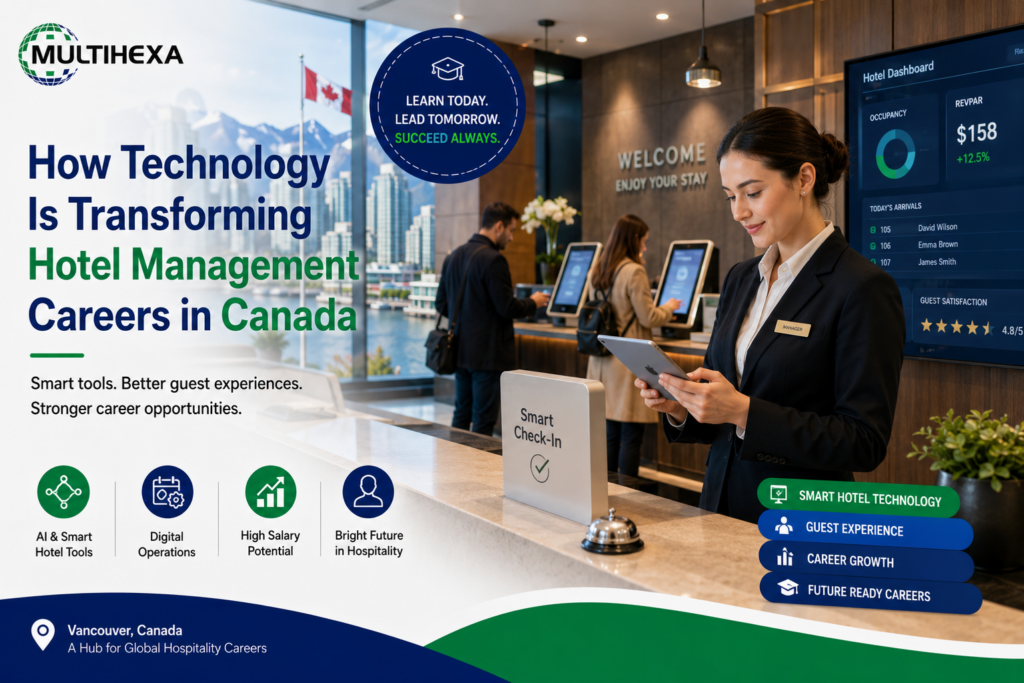
Ten years ago, running a hotel meant you knew how to manage and greet guests, manage housekeeping, and solve customer complaints to keep operations smooth.
Now today?
You still need those skills, but now you need an understanding of the technology as well that works behind the skills.
A guest that checks into the hotel without even visiting the front desk. AI can predict room tariffs before competitors, and a chatbot can answer questions at 2 AM.
This is how a lot of Canadian hotels are already doing and operating.
For students that are considering a hotel management course in Canada, this can be a good shift because technology is not replacing professionals; rather, it is creating demand for people who can work with technology.
Hospitality Is Growing, But the Skills Employers Want Are Changing
Canada’s tourism sector has rapidly recovered in the past few years, and hotels are hiring across major cities, tourist destinations, and airports.
But the employers are no longer looking for candidates who only understand customer service; they want professionals who can confidently work with hospitality technology.
Because nowadays, hotels are generating enormous amounts of operational data every day, from bookings and guest preferences, using technology will help us make decisions faster.
Hotel Management in Vancouver Today Looks Very Different
Hotel managers no longer work behind the reception desk.
Instead, they use digital tools to improve guest satisfaction, reduce costs, and increase revenue.
| Traditional Hotel Operations | Modern Hotel Operations |
| Manual room bookings | Cloud-based booking systems |
| Paper guest records | CRM software with guest history |
| Physical check-in desk | Mobile and self-check-in |
| Fixed room pricing | AI-powered revenue management |
| Manual housekeeping schedules | Automated room assignment |
| Phone-based guest support | Chatbots and messaging platforms |
While technology can handle repetitive jobs, hotel professionals are focused on creating memorable guest experiences.
The Technology Every Future Hotel Professional Should Understand
You do not need to become a software engineer, but you should be comfortable using digital hospitality tools.
- AI-Powered Guest Service: Many hotels now use AI chatbots to answer booking questions, recommend local attractions, and provide instant support before guests even arrive.
- Cloud-based Booking System: Modern hotels do not depend on spreadsheets. They use a cloud property management system that allows staff to manage reservations, room availability, payments, and housekeeping updates.
- Digital Check-ins: After a long flight or a long journey, most guests do not want to stand in line to check in. Many Canadian hotels now offer mobile check-ins, digital room keys, and contactless payments.
- CRM Software: CRM systems in hotels help to store guest preferences such as room type, food allergies, birthdays, and previous stays.
- Revenue Management Tools: These tools are one of the fastest-growing areas in hospitality. These days hotels are using AI to predict demand, local events, weather, and competition pricing. Understanding of these tools has become essential for hotel managers.
Salary Structure for Hospitality Careers in Canada
The biggest mistake that candidates make is they think a fresh graduate from hospitality will only become a front desk executive.
In reality, technology has created entirely new career paths.
| Job Role | Average Salary (CAD/Year) | Technology Skills Used |
| Front Office Supervisor | $45,000–$58,000 | PMS, CRM |
| Hotel Operations Manager | $60,000–$85,000 | Operations dashboards |
| Revenue Manager | $70,000–$100,000+ | AI pricing tools, analytics |
| Guest Experience Manager | $55,000–$80,000 | CRM, guest feedback platforms |
| Hotel General Manager | $90,000–$140,000+ | Business intelligence, reporting |
Approximate salary ranges may vary by province, hotel brand experience, and property size as well.
Why Vancouver Is Becoming a Great Place to Study Hotel Management
You might be searching for hotel management in Vancouver because location matters.
Vancouver hosts millions of domestic and international tourists every year. Luxury hotels, business hotels, boutique properties, and international events all contribute to a strong hospitality ecosystem.
Students who are studying or planning to study in Vancouver gain exposure to modern hotel operations, industry-standard software, and diverse guest expectations.
So, Is Hotel Management Still a Good Career in the AI Era?
Yes, it is, but with one condition.
The graduates who are succeeding in this career simply won’t know how hotels work, but they’ll know how modern hotels think.
Employers now value candidates who welcome guests with warmth and welcome, understand business data, use digital systems confidently, and adapt to the latest technology.
That is why choosing a hotel management course in Canada by Multihexa that combines practical and hospitality training using modern technology will give you a stronger edge in the job market.
The future of hospitality careers in Canada isn’t about choosing between people skills and technology.
It’s about mastering both.